art · Art & Writing

The Number One Thing that Changed my Art

Hello Stranger.

If you were here right now, there would be clothes and trash on the floor, and dishes piling up in the kitchen. You would detect a faint light in the window, but the curtains would be drawn, and the door locked because I did not trust the night. For the first time, you would see bills and notices with my personal information littering side tables and flung haphazardly on the kitchen table and under it. But what would I care? The dangers are outside. You are inside. You would feel vaguely ill at ease, and I would be grateful that you felt it too.

There would still be food and something to drink.

And it would be a good night to discuss the subject of art.

My art changed forever when I stopped trying to make masterpieces, and started making things that were accessible.

There are two aspects to this. The first part was mental.

About three New Year’s’ ago, I bought myself a nice sketchbook. I had very specific plans for it, it was going to be used as a field guide for a world I was building, hoping to make a book. A list of ‘flora and fauna’ and the corresponding illustrations. I painstakingly researched medicinal plants, sketched and painted them, and wrote descriptions of them describing how they would apply in the other world. I got two pages done. I didn’t touch the sketchbook for the next year.

I was proud of the art! In fact, I still really like what I created. But it was stressful. It was high effort, and joyless. I was working full time and in college, and when I got home, I was exhausted.

It all changed when, a year later, I sat down to draw with my little sister and sketched a frog, a little cottage, and some mushrooms. And then it looked empty, so I splattered it with blue and green paint. I liked those.

Just like that, the sketchbook was ruined. It was no longer going to be used for flora and fauna of one specific world.

Now, this doesn’t bother everyone, but for someone like me, it made my skin itch. I felt a vague but intense sense of shame and guilt for straying from my original intent. I was a flake. And my story would never exist.

Let me just say, I have made more art, and more bright, happy, interesting artwork, and sewn together more stories in that sketchbook than I ever did before. When I had to quit my job, move states, and stayed in a room, sick with long-covid for three months, I made art. Not beautiful, detailed portraits. Not things that took my energy. I drew simple lines and painted in bright colors. I used whatever I needed to ‘cheat.’ Whatever tools could help tell the story that I hadn’t allowed myself to use before. And I didn’t freak out when sharpies bled onto the pages behind them. (That was a big deal for me.)

Instead of stressing about what my human characters looked like, I just drew a scraggly little guy in pen, and painted him in bright colors, and wrote him a little blurb in a pretty font. Instead of meticulously planning a page, I drew a general idea of what I wanted and splattered paint all over it. It didn’t have to be ‘the exact mushroom from my head,’ it had to be a mushroom. It didn’t have to be a perfect van, it had to be a van on a misty mountain with the words, ‘I would like to live in a van and drive through the mountains one day.’

I know I’m rambling, but honestly, how often do we hold ourselves back because we’re afraid that either our art will look imperfect, or that the imperfections will look like us? Art is one of the few areas in life that I don’t just carry shame and it eats me alive that other people do.

For the next week, what if you drew little comics with stick figures. What if you painted abstract figures or splattered colors. What if you looked at it without criticizing yourself so harshly. What then.

The second part was physical.

After long-covid, I am chronically exhausted. I am often sad or numb, and you know what, I was before too. But I can’t just ignore it anymore. When I get sick now, I stay sick for a long time. I feel like I have so little within me.

Babe, if you have a funny joke in your mind but it can only happen in a certain scenario, write it down. If you want to sketch Pete Davidson on a receipt from the Chinese restaurant, do it. If all you’ve got in you is a weird little guy in a striped sweater, but he’s there a lot, get him out on paper. Draw stick figures. Honey, it’s okay. The art that I make when I have almost nothing, is the art at the bottom of me.

It changed my life.

Just create what’s accessible to you. It’s okay.

Anyway, much love to you. As you know, my name is not actually

–Mabel
Small Dream Saturday

Small Dream Saturday, Entry 11

Hello Strangers, 

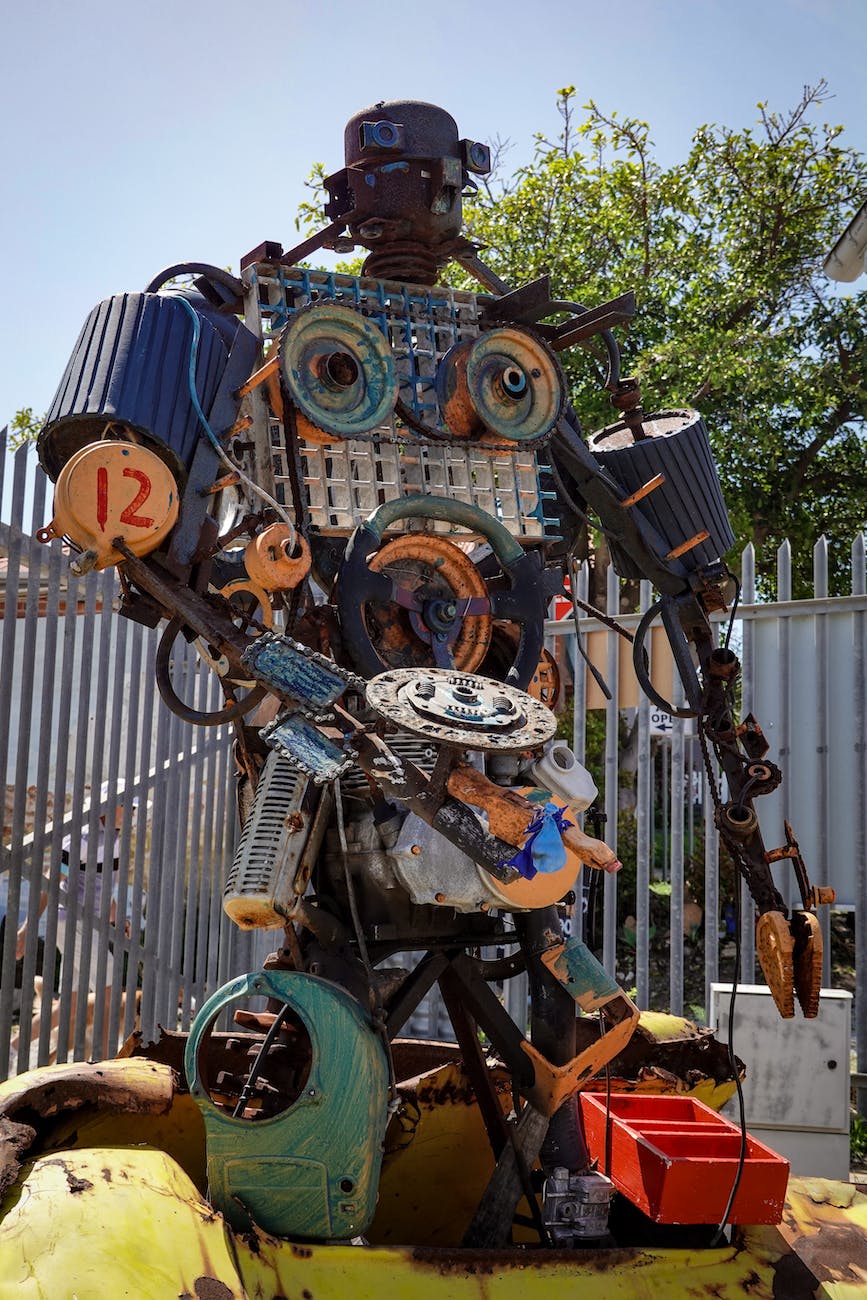
In honor or earth day, my dream this week is to one day teach a community art class using unwanted things. As you may have noticed, many of my dreams involve the use of junk. When I was a teenager, I used to cut cardboard from cereal boxes to make book covers and canvases. Cardboard has a tendency to “drink” paint; it sucks the pigment and the liquid into its surface, but! It was far better to paint on than printer paper, or even low weight art paper. If it hadn’t been for those makeshift canvases, I never would have picked up acrylic painting, and if I’d never done that, I would never have found gouache. 

In the future, I have all kinds of projects planned that I genuinely believe will be beautiful. New paper made from old phone books, handmade journals, faux stained glass, mixed media master’s studies, pendants with paintings inside pressed flower water bottles and lanterns…There’s a million things that have been made by more creative people than me, and they’re easy to find. Just type ‘plastic art’ into Pinterest, and you’ll find incredible things.

But the other thing I’d like to say about these second hand DIYs is that the power of children’s imagination cannot be understated. Little girls of seven years old have more complex weaving skills than many adults because they’ve been braiding hair and making friendship bracelets since they were in preschool. There are still some little boys who paint model cars with their fathers, and a significant amount of children I’ve found are fascinated by intricate geometric patterns. 

My hope is that by the time I have the option to teach a community class, I will know how to incorporate the knowledge of that community into the curriculum. How beautiful would it be if entire towns of people returned to a system of creation? Everything from rebuilding engines and building tables from scratch, to making windchimes and decorative stepping stones, to making rugs and wallhangings? Think about the sense of pride in that place, knowing the craftsmanship involved in every little thing. I hope to one day have an art truck with a frog holding a paintbrush on it. I’d drive it around and give lessons to anyone who wanted one. 

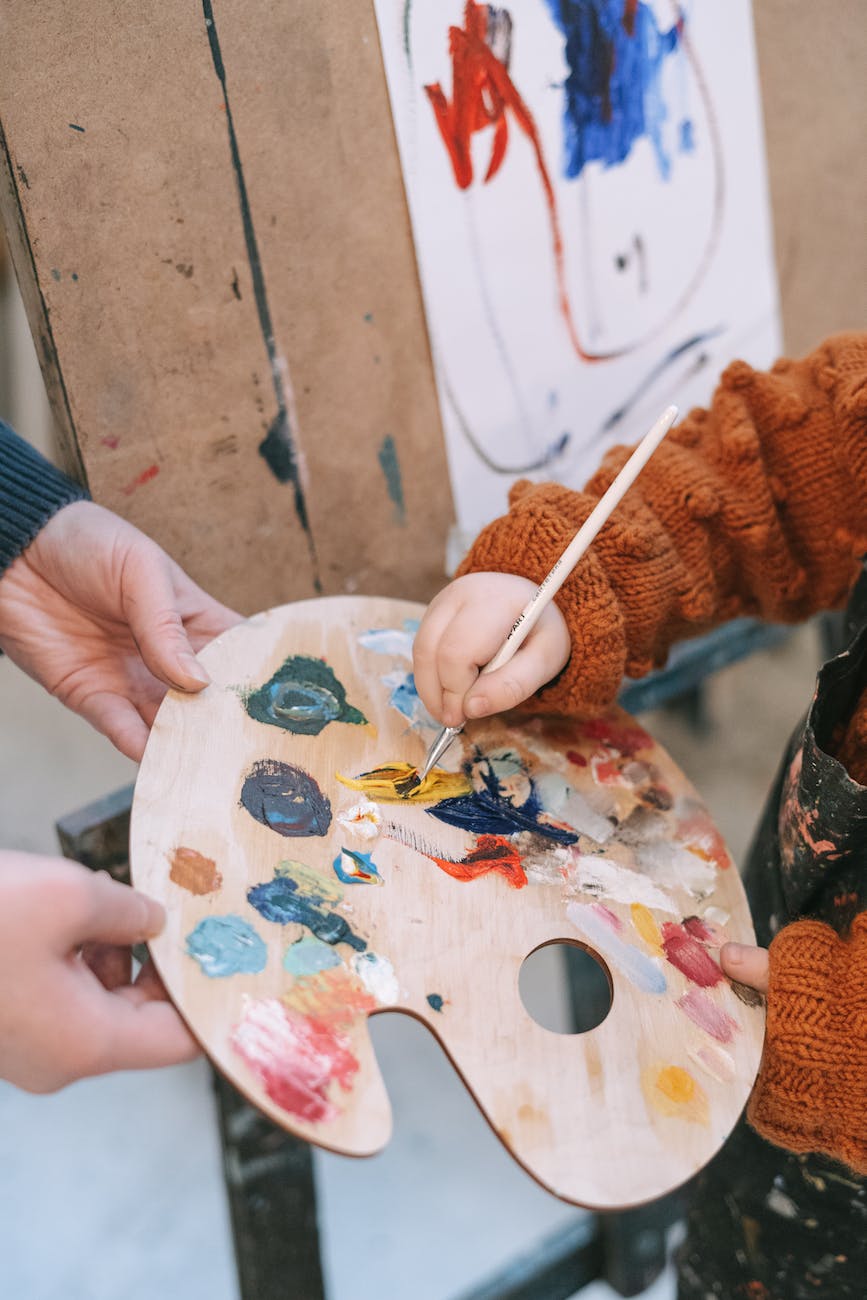
Photo by Magda Ehlers on Pexels.com
Photo by Minh Ngu1ecdc on Pexels.com
Photo by Ivan Samkov on Pexels.com

Happy Scrapping, Strangers. 

–Mabel

Art & Writing

The Medium of Story…

Hello Strangers, 

It is officially spring! Has been for a week. Flowers are blooming with the leaves on the trees, bugs are back, jumping and buzzing above the wildflowers and grasses, and the sun has gotten some of its color back. It’s looking to be a beautiful season. 

There are so many stories in nature. One area of the forest holds standing water, mosquitoes, and the moss which will continue to live despite  the summer heat, another has a babbling brook and Black Eyed Susans that the deer come to drink at, still another holds a meadow, which somehow always manages to catch the sunlight, gold in the middle, and green at the edges from the filter of the leaves. 

That’s an apt metaphor for story as well. I read somewhere that a lot of people today have stories inside them, but assume they have to turn them into novels. That simply isn’t true, there are a thousand ways to tell a story. They don’t even have to be written

My favorite living artist is named Robin Sealark. She has an excellent YouTube channel under that name, and she was the person who taught me to experiment with everything in my art. To sketch, paint, and tell story with abandon. Art-a-thons and studies, realistic and stylized…She explained that in the first year of an art degree, students work in the studio for hours a day, months on end, trying everything. Acrylic, oil, gouache, watercolor, graphite, charcoal, chalk, crayons, sculpting, digital mediums…And then after they’ve tried everything, they specialize.  

So, in a generation that has access to everything, do we limit ourselves? 

I’ve started a journal, and everytime I have a story idea, I write it down. I think about it, and then I also add what medium I think it’s best suited to. Some of my stories are very visual, so I pick comics, graphic novels, or animations, (animations are obviously out of reach for a lot of creators, but I still like to list it as an option!) and some stories enter my mind and I imagine telling them around a campfire or as a bedtime story. These might be better suited to podcasts, songs, or a simply written script I can memorize and tell as a bedtime story, or at a campfire. Not everything has to belong to everyone. 

You can write novels, short stories, poems, tv scripts, you can make mixed media stories like comics and graphic novels, you can make sculptures and paintings that encompass a story, dance, song, podcast, blog, youtube channel. You can cook stories! You can weave a story! Literally. 

What I’m asking is that you don’t limit yourself before you’ve tried everything. Even the people who write medical textbooks and grants are telling stories. Marketing is storytelling. Landscape paintings are stories. Embrace all of the mediums. Who knows, maybe you’ll find a new way to create. 

Happy Spring! 

–Mabel