cottagecore

End of August, and Thoughts on the Moon

Hello, Stranger. 

I usually say ‘strangers,’ but I’ve always felt there was only one of you here with me at a time. And you’re fantastic, by the way. There actually is a reasonable chance I would say that to you if you were here in person.

I’ve moved locations. I live in an apartment building with a haunted elevator named Otis. The walls have a sickly yellow pallor, and the furniture, which gives the impression that it has seen things, still invites you to sink into it and sleep. There’s old paintings with packs of dogs in the hallways and there’s a piano room here, which I have been begged not to use. 

On this last night of August, I’m thinking about the moon. Yesterday was a Super Blue Moon. It will be the last one until 2037. Tonight, the moon is the color of aged paper but glows in that way which you know breaks a vampire’s heart and causes the werewolves to howl with homesickness. I don’t believe in those things. But they still make me sad. 

The reason I’m thinking of the moon though, is that I’ve always been grateful to the Lord for making it. Whenever I was young, I would walk outside in the darkness and look for the moon. It wasn’t always there. And I would feel lost, and like the world truly was ending. But anytime it was there? I had so much calm. True peace only comes from God, but I think he hung the moon in the sky as a present just for me. And all the lonely people who feel like they’re spinning on this giant rock all by themselves. A train conductor. A musician called Radical Face, maybe. The characters we think about, abandoned—or so they think—to the night. 

What is it about the moon that makes our hearts ache? 

Last week, I had an artist stand in front of me while I made a blind portrait of him and tell me a story about his grandfather’s death, and the strange events surrounding his passing. He said that ever since then, he’s thought of his grandfather’s Lincoln town car and wondered about the significance of objects in the world. If there’s more meaning than what we see on the surface of things. Where the meaning is. How the meaning happens. And I butchered what he said just like I butchered that portrait. And then I come back to the idea of the moon, which I look at through a new window in a dark room, with that same dull ache that I can’t reach it, and maybe never will. 

But God hung it in the sky just for me. 

And all the lonely people. 
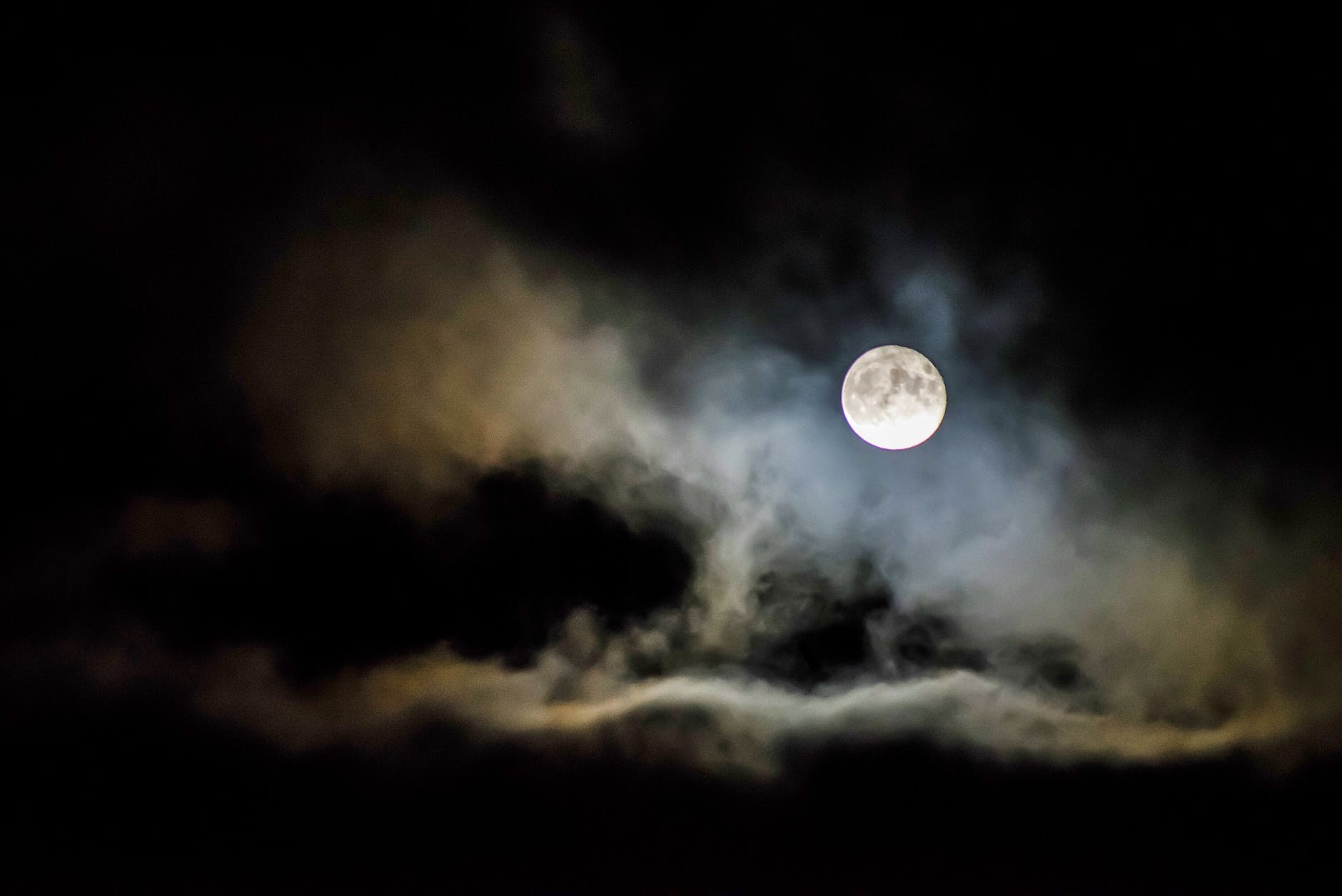
Photo by Joonas ku00e4u00e4riu00e4inen on Pexels.com

“He has made everything beautiful in its time. He has also set eternity in the human heart; yet no one can fathom what God has done from beginning to end.” —Ecclesiastes 3:11

Hey, all my love Stranger. 

–Mabel

Art & Writing

The Rising of Bread

Hello Strangers,

This post is not about breadmaking, but about something I haven’t been able to stop thinking about since I started baking bread: the resting period.

If you’ve ever read the Grimm Fairytales, you may have also been told of how two brothers traveled the countryside in a marvelous adventure, collecting their stories in taverns, from gnarled old women in remote villages, and on street corners where charlatans spoke in hushed tones that feigned secrecy, but would instead draw their crowd. It may surprise you to learn that actually, a large number of their stories were collected just across the street from their house; from their little sister’s friends. Their second, absolutely integral source, was an upper class woman and her family who had been collecting them fastidiously throughout their lives. 

In her book, ‘Clever Maids’ (which I highly recommend) Valerie Paradiz goes through the lives of the Grimms, and also through the lives of these women and their work. 

During this time, men and boys down through the middle class had more access to education than at any time in their recent history and women continued to work in the home, often without access to books and certainly not to scholarly papers and journals. But while men were gaining education and scholarship, women were continuing the oral tradition, often making alterations to old stories and creating their own. While the reasons we remember the brothers and not their sister and friends would be a fascinating, if disheartening discussion, this post focuses on the women themselves and the way that they lived to cultivate this culture of storytelling.

It has been posited by historians that one of the reasons there are so many spinners and weavers in folklore is because it was the women weavers who told the stories, hence the terms “spinning a yarn,” and “weaving a tale.” According to Paradiz, women often told stories as they did repetitive work such as weaving, embroidering, laundry, or cooking, much like we listen to podcasts or watch dramas while we work today. 

When making bread, the same ingredients combine, they are worked and kneaded, and then they are left covered in a dark spot to rest. And as the dough rests, it rises. I think these women had their chores and schedules like ingredients and a sure routine, pounding them out like bread on a counter. Though at times it may have been boring or lonely, and limited, the quiet lulls cultivated the stories. The quiet created the rest period. Their boredom forced them to imagine, and their motherhood forced them to teach. Their girlhood forced them to invent things that men made no time for. And because of them, we have thousands of stories that may otherwise have been lost. Entire cultures fossilized in living voices until they would be written down. 

I think this is where things get confusing today. In 2023, makers, creators, and artists are encouraged to work in a way that generates the most content in the least amount of time. No longer artisans and craftsmen, they are considered ‘content creators’ and manufacturers. This model is based on the notion that all art, whether it be singing, drawing, dancing, or storytelling, is only justified if it is made to generate a profit (and if you are going to make a profit creating today, it’s very hard to do without following this formula). What this has led to within art communities is overbranding, repetitive and inauthentic content, and lack of satisfaction and burnout as artists. 

There was so much about the past that I wouldn’t want to return to…But the idea of skilled and strenuous—yet simple—labor, and a model of creation and play simply for the sake of itself is something I think many of us could benefit from. 

I can’t say one way or another, and I’m sure there are male creators that would benefit from this type of creation as well, but it makes me wonder if women create differently, and have different motives for doing so. Would this be more beneficial for one sex than the other? All I know is that without work to distract from my creativity, I stagnate as an artist and a person. And without imagination, I am unable to work. As a creator, I think it’s time to take back our craft and decide for ourselves what it will mean to be artists.