cottagecore

The Green Dress

Hello Strangers.

Last week I went to my favorite thrift shop. My sister was visiting and when we went inside, all of the old things were new. New, old items everywhere we looked, and in a way, I was a bit shocked because that meant that they’d either been sold or removed and replaced with something the owners hoped would sell. Now, that’s obviously how businesses work, but whenever I’d come back before, so much had been the same. Now things looked markedly different. 

I found a green dinner plate engraved with an image of a cottage with a fire in the hearth and thought, this is exactly what I want my life to look like. I looked at the tag and it was only a dollar. It was in perfect condition and frankly, I thought that was a great deal. (Some people, for some reason, like to sell plates for eight dollars.) The plate symbolized something for me. Home, and family, but also the specific ways a person can build a life. It reminded me of food forests and fishing, and the hopes that one day I’ll have a husband and family and we’ll work towards that life together. 

Then we made our way to the other side of the store. 

The other side of this thrift shop has a room that’s mostly 60’s through 80’s vintage. It’s not out of step with the rest of the store at all, but it is distinct. Among the rather disturbing collection of stained plaid couches and slightly greasy feeling clothes, there was a jade green, floor length, ballroom gown. It had massive puffy sleeves, a faux velvet corset attached to gaudy fake rhinestones, and it crinkled in my hands like plastic; I’m actually not sure what the material was. It was ridiculous. It was magnificent. It was twenty dollars. I showed the entire group what I’d found. I picked it up and put it down. I found a really pretty nineties mini dress in purple crushed velvet. Also twenty dollars, and clearly the more logical choice.

And then, I left with neither. 
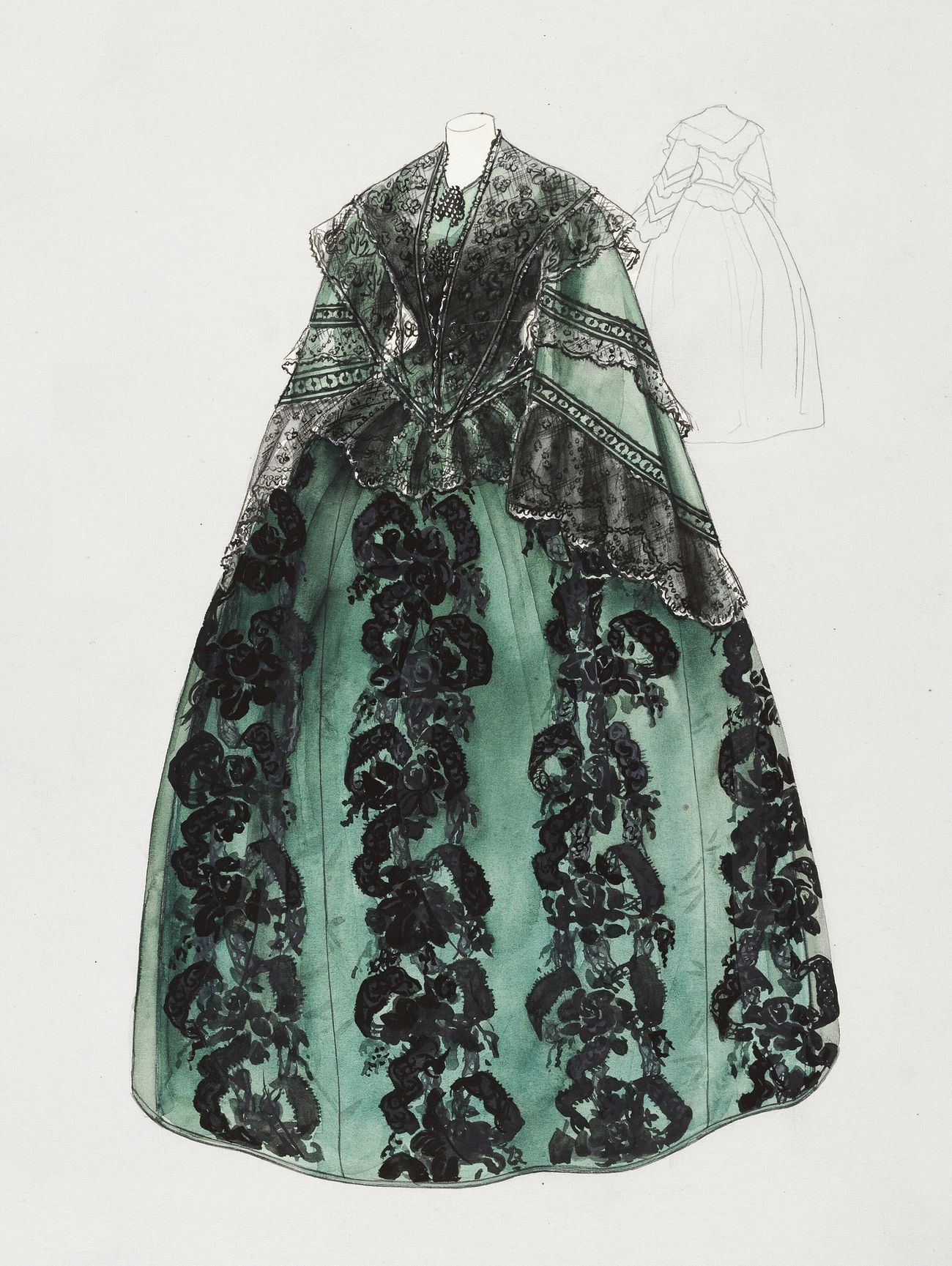
If I don’t find the time to go back and get it, I believe I’ll regret that for a very long time, as silly as that might seem. Much like the plate represented the life I want to have one day, the dress represented a part of who I want to be as a person. It was unapologetically so ugly that it was beautiful. I wanted to take it out on my expeditions to the woods. I wanted to paint in it and bake bread in it as I have been doing more and more frequently. And yes, I wanted to dance in it. It would have been a statement to myself, that regardless of if anyone else liked it I would have fun. I would enjoy it and be joyful in my ridiculous green dress. But instead, I let it go. Because it was twenty dollars. Because I felt I didn’t have room for it. Because it was silly. 

The other day, I was watching House M.D., and a patient was put on death watch. She received the wrong treatment for an illness, and it was going to kill her within 24 hours. As she and her doctor discussed their lives and the things that connected and separated them, she talks about her regrets. She said she’d made bad decisions every day, but that she’d always thought she was young.

She didn’t say, “I thought I had time.” She said, “I thought I was young.” 

Opportunities come along every day. Whether it’s the choice to drink more water, spend more time in the sun, do the laundry, take the job, get sober, tell that person how we feel, volunteer, read the Bible, or find Jesus for the very first time, every day is made up of choices. We will all have regrets at the end of our lives. I hope I don’t regret not doing the things I should have done because I thought I ‘had time.’ Because I thought I was young. 

To green plates and green dresses, 

–Mabel 
Art & Writing

Small Dream Saturday: Entry 6

Hello Strangers.

Last week I went to bed dreaming of what it will be like if I ever do own a summer camp; specifically some of the projects I want the kids to do, and I again thought about all of the different ways to build forts. I thought of two ideas specifically:

Years ago, I found a project where you make an igloo out of plastic milk jugs. You glue them together side by side, flat bottoms facing out, lids facing in. I thought about how if I were a child, that would be wonderful to build, but the lids might break my immersion. So, then I thought, what if the lids were painted and stenciled with special designs? What if when you twisted off the caps, there were rolled scrolls on the inside of the bottles? 

And then I realized you could put anything on the scrolls; puzzles and ciphers, challenges to help the community or learn, information on old myths, legends, and landmarks… But that’s not all! You could decorate the outside of the structure as well, any way you wanted, but I thought it would be neat to cover the base with soil and grow some flowers, as well as paint the jugs with moss mixture. You could make a mud dome, decorate it with rocks, the possibilities are endless. What a cool clubhouse, right?

The second idea would use cardboard milk cartons as brick molds. I would love to make colorful, translucent bricks, however, I ran into a problem. The only relatively ecofriendly and inexpensive method I found for making translucent bricks was to freeze water (like in the case of a winter fort.) So, what I thought of as an alternative was to use rectangular water bottles that had been painted with a mixture of glue and paint, so they’d be colorful and look reminiscent of stained glass. We’d use those to build a low, three-sided wall, and then the kids would make a roof out of plastic tarp they colored and designed stretched over a frame. I’ll have to research the effects of colored, filtered light, as well as how plastic leaches into the ground…But I think it has potential to be a great summer camp project!

Those are this week’s small dream projects. I only hope that one day they’ll be possible. If not for me though, maybe you and your kids; anything is possible right?

Happy Saturday and Happy Dreaming,

–Mabel

Art & Writing

My Experience Writing the First Draft of a Novel

Hello Strangers.

I’ve done it.

Last Tuesday, I completed the first draft of my first novel! It’s a day I’ve dreamed of since the seventh grade, and finally, it’s done. The draft itself is kind of abysmal; it’s very short, the characters need more work, the plot needs filling, etc., but now that it’s completed and I’ve had some time to think, I’d like to write about the process of making it.

The Ignition

“Steal like an artist” is a maxim that has caused controversy within creative communities for at least a couple of years now, but unabashedly taking inspiration from multiple sources (that part is important) to create something that’s yours is what creation is…So when my favorite side character died in a tv show I loved, I had to steal him…And change almost everything else. As soon as he died, a story immediately began materializing in my mind. The characters shifted, the setting changed drastically, the plot would come later, but there was the inspiration. Of all the story ideas I’ve had, I’m actually shocked that this is the one I managed to write.

Incubation + Creative Partners

As soon as I had the idea, I let it roll around in my mind for a few days, scheming aesthetics, the feeling of the story, relationships, and things I wanted to include. Once I had a bit of it figured out, I ran and got my younger sister. She and I have come up with stories together for years. We’d tell them to each other at night, we’d brainstorm during the day, and we’d show each other art we made for it. Creative partners are one of the greatest assets a person can have, because instead of regurgitating the same thoughts over and over, they offer new ideas. It helps to keep ideas from stagnation and death. She loved the idea of this character in Scotland, surrounded by an obscene number of castles, so every night for the next two months, we spent an hour every night just talking about everything we wanted to happen. This stage was literally just talking, but it led to something I’ve never done before.

The Outline

All my life, I assumed that if I just started writing, then the plot would fall into place. Really, I was just denying the fact that I was scared to write an outline because I didn’t know how. I started writing chapter headings with brief synopses, but that ended up being too specific, so I labeled them ‘sections’ instead. I ended up with about eight sections across seven pages, and I managed to figure out the basics of the entire plot. It took probably a month, and I was still very intimidated by the process, but it saved the story.

Writing It

I’ll be honest. There was about a four-month period where I only wrote six thousand words. I was frozen. When the New Year came, I had it in my resolutions to finish the first draft. About a week later I got to work. In my post on routine, I went through the things that helped establish an actual writing habit. I was lucky enough to have a couple of hours a day to write. That blessing also helped me to write the bulk of the draft in two months. I would check my outline, decide what needed to be written that day, and then imagine individual scenes and chapters that it could be fit into.

That was my process. Every process is different, but I hope this encourages you in your writing journey. You can find your own way and figure out what works for you.

Salutations,

–Mabel

Small Dream Saturday

Small Dream Saturday: Entry 5 

Hello, Strangers.

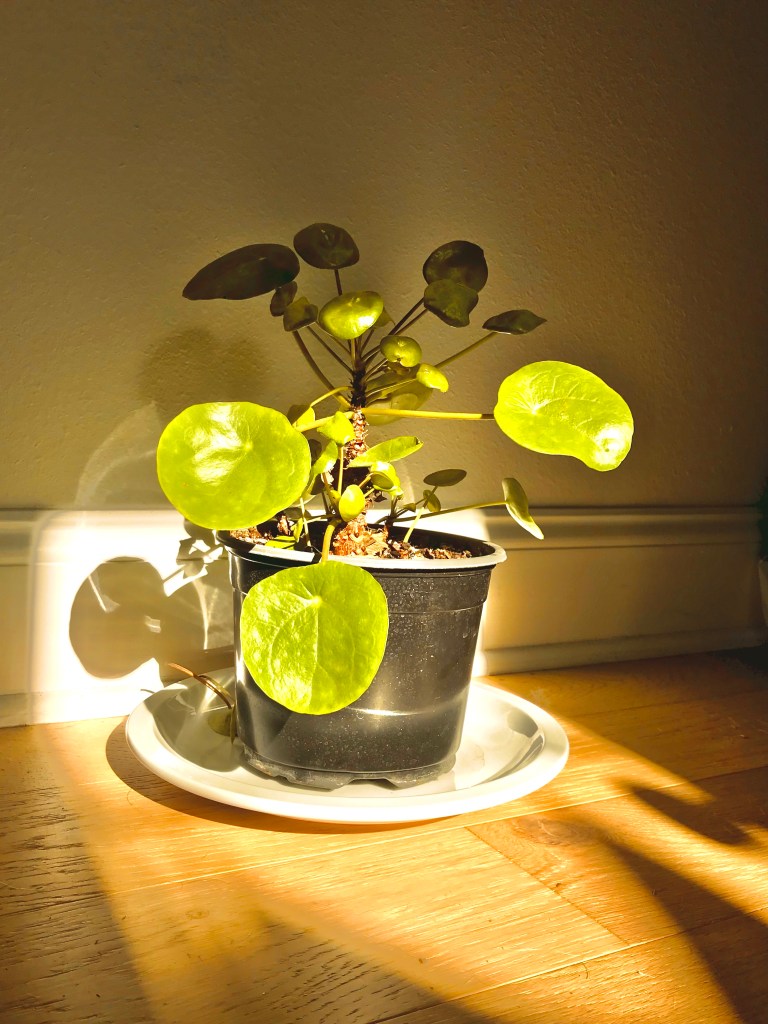
I have a houseplant named Georgiana that I only water from a teacup. She is the only houseplant I have not killed. There are other plants, which others have cared for, that are fine. The ones I have been responsible for, however, have died. 

The houseplant in question.

Despite this, I would one day like to have a very large garden. If I create one, it will hopefully have tomatoes, zucchini, cucumbers, potatoes… I might buy a few fruit trees, some kind of grain, some berries, et cetera. I’ll have terracotta pots filled with basil, parsley, and cilantro sitting on the windowsill. My favorite part, however, might be in the area I imagine beyond the garden:

I will fill a basket with the white tops of dandelion flowers from the parks and forest around me, and when I get home, I’ll have a wishing party. Some friends and I will take turns blowing the needles (carefully, I suppose) into the very back of my back yard. When they flower, they’ll hold the soil in place, feed the bees, and I will have another plant to use in salads and teas. I’ll pick the yellow flower heads and use them to make dandelion honey. I’ll have enough flowers to make jars of the stuff. This is one of the dreams I do believe will come true. 

Speaking of which, since my last small dreams post, I’ve come up with a handful of funny moments for my stories that have made me view my characters in a different light. Are they actually funny? …Maybe? I don’t know, but they were fun to imagine. I call that progress! I look forward to writing again soon. All love,

–Mabel

Art & Writing

Creative Rituals

Hello, Strangers. 

All my life, I’ve wanted to be a novelist. I wanted to write book series after book series and earn a nice living and some recognition. The problem for me has always been, simply, I am not a very good writer. The process of writing a structured novel has eluded me for years, and short stories are somehow worse. I lose the plot, I sound patronizing or preachy, I can’t find the words, my story is dull, characters lack dimension. In frustration and laziness, I have abandoned countless projects and forgotten the details of the rest. And that was when I was writing consistently at all. But one thing I’ve always had some ability in is writing poetry. I love poetry because it frees me to tell a story without constraint, or worries about proper form. I can meditate on the meaning of words and truly slow down to think about what needs to happen. it doesn’t have to make sense. And the poems don’t have to be good. They just have to exist. And therein lies the secret to ritual and routine.

Not poetry,

but love. 

The word amateur initially came to English through the French, and the French took amateur from the Latin amator which means “lover”. According to Merriam-Webster, in its earliest usage, it meant:

“one that has a marked fondness, liking, or taste.” 

An amateur writer, then, may be clumsy, inexperienced, and lack talent in the craft, (which is closer to how the word is used today) but they get into writing for the love of it. 

Merriam-Webster defines ritual as a ceremonial act or series of acts which are repeated in a precise manner. The type of ritual I am referring to today is not religious or spiritual, but a way to enforce a habit.

To be an amateur is to love something even if you have no skill in it. Ritual can be defined as the result of disciplined love to practice something until you have skill in it.

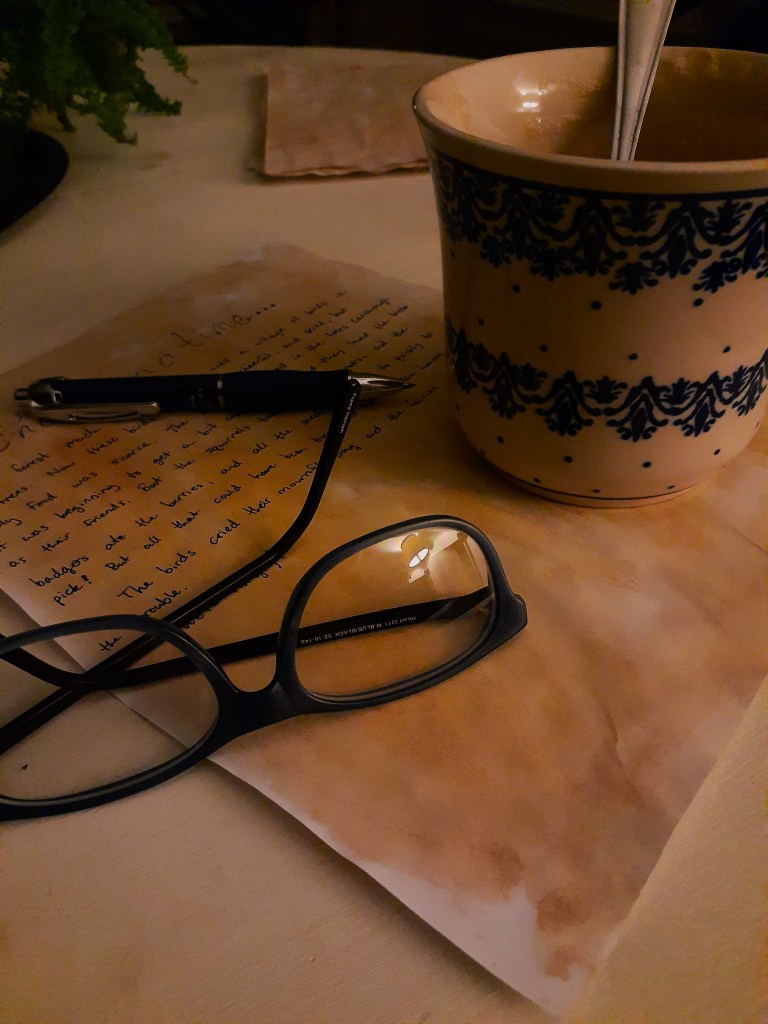
Every night after I got home from work, I would take off my uniform and replace it with a set of pajamas. I needed to be comfortable and warm. After it got dark and the rest of my household went to bed, I donned red lipstick and mascara, made myself a cup of something hot, gathered my journals and went to sit in the dim glow of the lamp in the dining room alcove. As low music played quietly, I would ruminate, and then, in a format that I knew I could trust, I would write. Here are some of the key elements that I’ve found help me when creating a writing ritual:

Time and Place

The first thing to consider is practicality. Do you only have time to write in the mornings or evenings? Build writing into that time. I typically waited until everyone was asleep and when it was peaceful and quiet, I got to work. It is important to be consistent, but flexible as needs must. The second thing to consider is place. Do you work better in the hustle and bustle, or do you need silence? Do you need the comfort of your bed, or the dignity of a desk? Are you alright with mess, or do you need a clean environment? You can build a space with whatever you have by making small adjustments as you need to.

Attire

I write whimsically; fantasy, children’s stories, poetry, etc., and I find that I work best in pajamas. I’m warm, comfortable, and able to contemplate quietly. The makeup I wear helps me to feel artistic and awake with my ideas. In my mind, it adds a layer of depth to my writing persona. What you wear can affect your mood and your view of yourself, and exercising creative control can help you to feel more confident when you create.

The Five Senses

Ritual relies significantly on the five senses, which are: sight, hearing, touch, taste, and smell. If you have a glass of wine and burn your favorite candle whenever you write, you have two different things to associate writing with. You may use a certain playlist, turn on the same lamp, and sit in the same place. You may find it more difficult to write without these things once you have a routine, but they can also help you greatly when you do use them. Much like grounding, these elements can give you a mental anchor to the task at hand. The things you associate with writing should be pleasant, but not distracting.

The Love of an Amateur

I mentioned in a previous post that I have a hard time writing humor into my stories because I always see people as sad. I would like to write funny stories, but I write sad things instead. I would like to write short stories and novels, but I write poetry and journal entries instead. Yet, this is not bad. I do not write funny stories yet. But through writing my sad things, I am learning how to incorporate laughter. Through years of writing poetry and journal entries, I have gained enough confidence and discipline to try novel writing again (and I am!). Don’t let your love for the craft die out! If you need to, begin your ritual or routine with warmups, or a medium that is familiar to you, and comfortable. Gain confidence and passion for it, gain experience and expertise, and then challenge yourself to do the hard things.

I hope these ideas can be helpful to you, and I look forward to writing more about writing, soon. With love,

–Mabel

Small Dream Saturday

Small Dream…Monday: Entry 4

Hey Strangers.

I am capable of telling some beautiful stories. They’re sad, usually. They have hope, and happy endings, but they’re still sad. My characters lack dimension because I can only write them how I see them, and not how they might choose to hide if they were real. And real people always hide. Besides, no one wants to read stories that are only told in shades of blue.

Watching some of my favorite cartoons this week, I’ve realized how endearing and complex they are, because underlying their characters is a profound sadness; but on the surface, there is a profound humor, and love is a critical element of both. 

I missed Small Dream Saturday last week, and I missed my regular posting. But my dream was for humor. Unironically, one of my favorite things in the world is to give people close to me a place to mourn. Sometimes people need to cry and for some reason, I see sadness like little else. But I have stripped my worlds, both real and fictional, down to grief and have ignored the joy of humor. I’ve ignored why people lie. I’ve forgotten why both humor and grief make the human, and my dream is to learn to write in a way that makes people laugh and makes my characters something a real person can connect to. 

I’m excited to learn how to write laughter. That’s my dream. 

With love,

–Mabel

Small Dream Saturday

Small Dream Saturday: Entry 3

Hello, Strangers.

For the first five years of my life, I lived in Washington State. The sun rose at three-thirty in the morning, and by noon the sky was covered in a thick blanket of gray clouds. It would drizzle throughout the day, and this happened most days. My preferences were set. The blue sky was off putting to me, and white puffy clouds were ugly. I hated nothing more than the sun. From then on, every place we lived disappointed me in its lack of gray days and rain. 

Many years later we found ourselves on the Southern border of the United States. The sun there was different than anywhere else I had ever been. It wasn’t yellow or golden, adding depth to the color of plants and trees around it, it was almost white. It bleached the desert ground and sky, turning them a pale tan and a faded blue. Frequently, there were no clouds to break up the monotony, so the blue sky sat motionless, the sun a pale king on its shifting throne. For months I felt physically sick looking at it, but with time, I learned to adapt. I would go out and squint at it, burn my arms, shoulders, and feet under its heat. I read books on the covered patio and sweat, and in the evenings I would sit on the low stone wall surrounding my house and talk to the memory of a loved one recently lost. It was the evenings that began to change my mind. Sitting out there, praying, or struggling with a memory, the sun would set behind me. The lights of the inner city began to glow in the distance, and the sky turned in a moment. 

All of a sudden, there were swirls of wisping cirrus clouds and massive cumulonimbus clouds that looked like cotton candy, and it was like the sun reflected off a diamond. For about seven minutes, the sky held greens, oranges, blues, purples, pinks, and reds. I would look up and smile until my face hurt at what I dubbed Tolkien Skies, because they looked like they held epic adventures. 

We eventually moved from this place too. The next place we went, the sun was back to its warm summer glow, and the green trees and earth returned, and I found I couldn’t live without sunlight as I had when I was very young. So, my dream this week is of a sun catcher. 

I would like to build a wooden fence and gate, and all throughout the gate I would like to drill holes. In the holes I will place colored marbles, and seal them in with clear glue. Every day that the sun is out, they will trap its light and glow, and when the sun is placed just so in the sky, it will shine through them in rainbow beams of color. It will be the perfect entrance to my home and garden, and I believe it will make me very happy.

As always thank you for reading, and remember to dream this week,

–Mabel

cottagecore · recipes

Fox Bread

Greetings, Strangers!

As we enter February, I sit here, reflecting on my writing habits. I often write in a room with a window that has limited natural light. I often write in the middle or later part of the day. Sitting in a gray box, I feel myself deflate, despite my myriad blessings. It goes to show how what we surround ourselves with colors how we see the world. And this leads me to the legend of Fox Bread. (I will give you the recipe, don’t be upset.)

There was a woman who lived on the outskirts of a village, way up North, and near a forest. Though the summers shone brightly, the winters were as violent and terrible as anyone could imagine. Houses often went dark, and firewood dwindled to nothing. During these days, the wind howled and cut trees, stones, and skin, and it was difficult just to make it to market to buy necessities.

That was the days’ task; traveling to the market to buy food and fuel. Even bundled up, her joints ached as she climbed the hills and found the path through the forest. She lamented in her heart the poverty and dimness of the world around her. But then, the woman saw a fox. Then, she saw another, and another. Right in front of her, making no attempt to hide, their bright orange tails bounded through the snow.

Now, foxes in these parts were regarded as tricksters, liars, and thieves. Their screams signaled chaos and mourning in the outer woods… If one saw a fox, local custom was to throw stones their direction in the hopes of maiming them, or at the very least running them off. This woman felt differently. She laughed when she saw them, a laugh of complete and total glee. Hearing it, the first fox looked back and locked eyes with her. Despite the darkening sky, his eyes were filled with sunlight. For a moment, time stood still.

And then just like that, they were gone.

She got her provisions and went back to her home, hoping to make some bread but knowing it probably wouldn’t rise; the air was too cold, the fire too small. Totally dark now, a small candle lit her kitchen, and in the far distance, she heard the foxes scream. The woman sighed and tried to steel her heart against the anguish around her. Sometimes, there is nothing to be done except to pray and go to sleep, so she went and lay down by the fire.

When she awoke the next morning, the sky was still heavy, but as she stumbled to the kitchen, she froze in amazement; wrapped around her bowl of rising bread was a fox. Around that fox were three other foxes. She began to laugh that same laugh, and the middle fox opened his eyes, not bothering to move his head. She could swear that he’d smiled at her. Her love and laughter were his price. As soon as the sun went down, the foxes yawned and stretched, and went back to the forest, but every morning when she awoke, they would return to warm the rising bread for the days’ loaf. She henceforth became known as the Fox baker, for every winter they returned, and she made bread for everyone in the village. Slowly, their view of foxes began to change. Slowly, brightness returned to winter and the village, like fox tails in the snow.

As February sets in, it can be easy to think that winter lasts forever. It will always be hard, difficult, and dark. It is easy to feel isolated, numb, and cold. If this world were all there was to look at, I would probably agree. Thankfully, I believe that there will be a day with no more tear, no more sorrows, and no more fears. There is coming a day when all things will be made new, and the evils that afflict this world will be done away with.

‘He will wipe every tear from their eyes. There will be no more death’ or mourning or crying or pain, for the old order of things has passed away.” (Revelation 21:4)

As a final note before I give you the recipe, this is what Christians believe about God; that He has always loved us, and in this love, he gave us free will so that we would have freedom to make decisions on our own terms. We used this freedom to turn away from God, and that has resulted in all human suffering since then. God never stopped loving us, and He sent his Son, Jesus, as a sacrifice for our sins. Jesus was hung on a cross to die, and as he died, he took the collective sin of every person who ever lived upon himself. He buried sin with himself and rose again, defeating death. If anyone chooses to believe in Him as their Lord and Savior, trusting Him to forgive their sins and turning away from them, they will be saved from eternal death, which is hell. That is the Good News, that God loves everyone no matter what they’ve done, and wants everyone to receive forgiveness and eternal life. We still have the same freedom we always have.

That is why ultimately, there is real, tangible, hope.

I hope this fox bread recipe will warm your heart and home, and remind you of hope:

Ingredients

1 1/2 C Warm Water

2 tsp Salt

2-3 tsp Sugar (follow your instincts)

2 tsp Instant Yeast (add a little extra if you want)

3 C Bread Flour

Instructions

Add warm water to a large bowl. To this, add salt, sugar, and yeast. Whisk lightly and allow the mixture a few minutes for the yeast to foam (But don’t panic if it doesn’t. Sometimes this happens, and it often still works out fine.) To the yeast mixture, add in bread flour and stir until just combined. Cover the bowl and allow it to proof for about two hours, until doubled in size. (If it’s cold outside, I recommend keeping it near an active oven, or wrapping a heating pad or heated towel around it, serving the same function as the fox in the story.)

After it’s proofed, wet your hands and remove the dough from the sides of the bowl, and pour onto a floured countertop. If cooking in a Dutch oven or pot, preheat the oven to 450 with the Dutch oven inside. Gently tuck the dough into a loose ball and put it back in its bowl to proof for another forty minutes. After it proofs, put it on a floured piece of parchment paper, and place them both in the Dutch oven. If you’re using a bread tin, preheat the oven as normal, flour your bread tin, tuck dough into a loaf shape, and proof in the tin.

Bake for 30 minutes uncovered, and ten minutes covered. Remove and let cool for at least fifteen minutes.

Happy baking,

Mabel

cottagecore

To Build a Home

Hello, Strangers.

There are so many different types of homes in the world. Some people have houses, some people have gardens, some people have igloos, yurts, huts, castles, palaces, apartment buildings… Home can be anywhere, it can represent any number of things. For some it’s family, for some it’s a place, for some an aspiration. And then there are people who don’t really know where they fit in.

Growing up, I lived in ten different houses, each different than the last. We lived in each corner of the United States, in different styles and sizes of housing, with different people and different dogs. Every place we went, my mother built something that looked like a magazine spread. She found furniture by the side of the road and painted it, found tables and shelves at thrift stores, she painted walls and lampshades and has created a collection of rugs, and everywhere we went, there our things were, rearranged, painted, or deconstructed, in a comfortable living space.

The other night I laid in bed staring at the wall in the dark. It had been a terrible day (week, actually), and I was trying to cheer myself up. I ended up building my dream home, but nothing was quite right. I decided to ask my friends what they thought were the essential components to making a house more homey. These are some of the things they said:

“Usually it’s something about the kitchen, like a natural light source.” –Lizzy Boyd

“Comfy furniture and good paint colors. And dogs…Ambient lighting that doesn’t come from the ceiling.” –Mckenzie Vanderbilt

“I think lots of light.” –Jessica Wayne

“For me, it’s more about people. Photos of family and friends and whatnot.” –Abby Barker

“Warm light. Well placed light just makes a house feel like a home. And also lots of blankets; they should have a place to go when you’re done with them, but you should have a bunch. And reading lights.” –Bree Kemplar

“Friends. Candles. Soft Blankets.” –Oóna Winters

“Have throw blankets!” –Nadia Martins

And my personal favorite from all those collected; when I asked him this question, he simply answered, ‘a table.’ I asked him to elaborate further, and he gave me this answer:

“It’s a center, so to speak. A place to eat, to sit with others, to talk, to make crafts, to play games, to invite friends to. On the ISS in space, where nothing can be set down because gravity will not hold it down, there is a table. Food cannot be placed on it, things cannot be set on it, you cannot even sit at it, but it is there. Because it was deemed necessary. Because the astronauts needed somewhere on their station to meet up for important things.” –Gavin Bolden 

I wasn’t expecting that. How could I? And yet, in two words, Gavin defined home better than any other person I’ve ever met. In all of my fantasies, I noticed the dim glow of light in the window, cast by the bulb above the stove, but how many times did I miss the table I’d set? That is always where I’ve taken guests. I put the steaming food in the corner nook and pulled out the chairs so we could sit there in silence. All this time I thought about the kettle, stove, glow, the windows, and doors.

But all of those are worth less without the table.

–Mabel

Small Dream Saturday

Small Dream Saturdays: Entry 2

Hello Strangers,

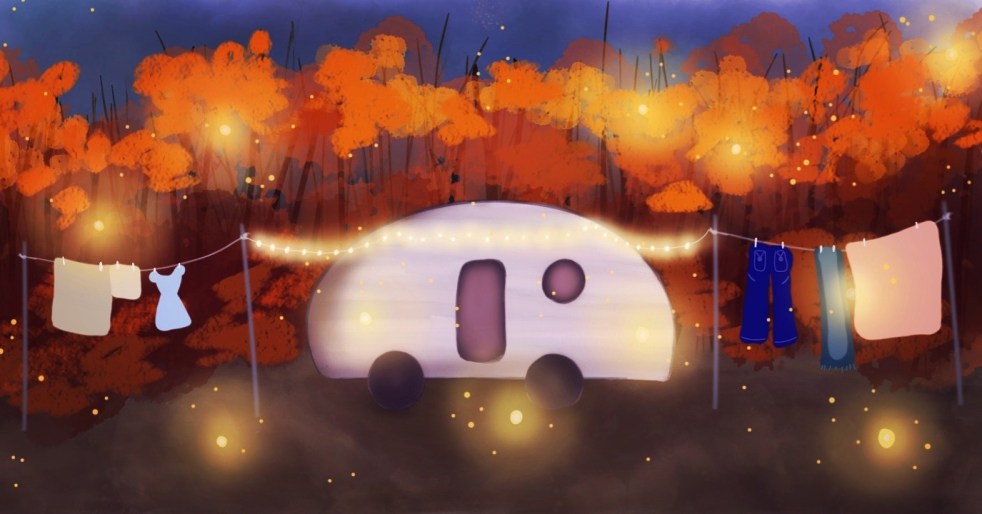
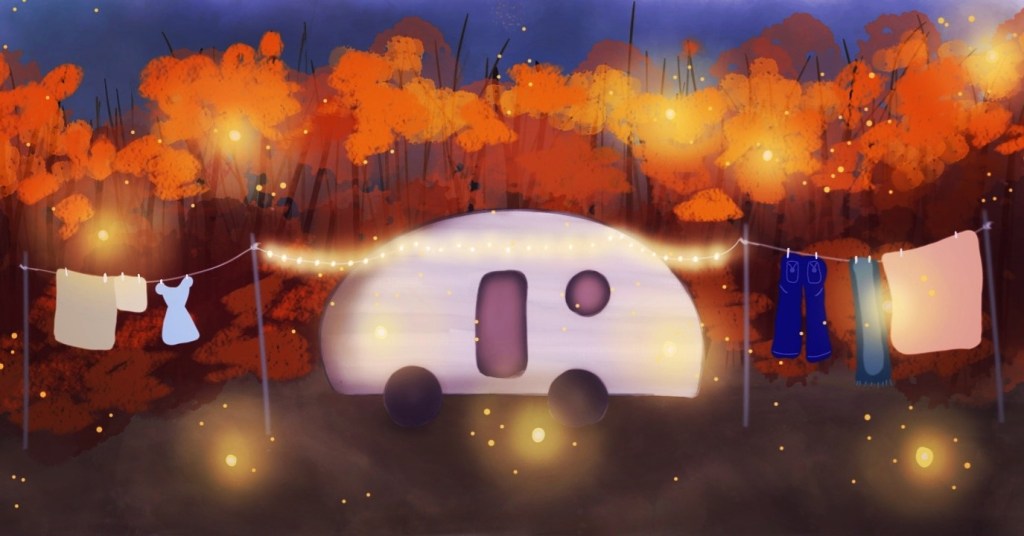
This week I was reminded of an old dream of mine, one that’s seemed dead lately; not something impossible, but I’ve questioned it, its purpose. I want an RV. 

In the RV, I’d drive across the country, visiting our national parks, keeping a journal, blogging. When I was seventeen, I brought home a book about the history of space travel from NASA. I brought home books on underground cities, radium girls, weather patterns… And I dreamt of going out to find things out…I’m not even sure what. 

The “not being sure of what” is what bothers me, but those adventures aren’t the only reason I wanted the RV. In fact, the RV isn’t the dream (at least not a small one).

The Small Dream is the cupboards inside the RV.

I want to have a cabinet filled with every instant drink I can think of; coffee, cocoa, apple cider, teas, and syrups. I want another cabinet filled with instant bread mixes, ones that will keep for a while. Some pasta, some jarred sauce, some soup bases, some rice. Options. I want a collection of bowls, plates, and mugs. If I have guests, that’s where they’ll stay. If my friends come over and everything is wrong, I’ll have a hot drink and biscuits waiting for them. If I’m not there and there’s no fresh veggies, milk, and eggs in the fridge, people will still be able to eat. I’d have a cabinet filled with blankets and sweaters. There would be a shelf with a few books, a couple of notepads, some board games, some pens. 

Then when I continue to examine it, I find that the cupboards aren’t the real dream either. The real dream is my insatiable desire to meet beautiful, bizarre, flawed, exhausted strangers, and have something to offer them. Why else would someone’s RV dream include buying land, and parking it? Mine does, and it almost always has. A garden, a path, a fence, and full cupboards. 

This is why dreaming is important. Inspect your dreams, and you’ll find what it is you really, really want. If I can manage to dream again—because things have seemed really bleak lately—life will get exciting again.

Ask yourself, what do you dream about?

–Mabel